

Trees are the biggest witnesses to the passage of time while offering sustenance, beauty, and shade. They also have their own stories and cultural significance, making them, at times, more important than other living things.
If you are a tree enthusiast and would like to learn about all the trees that exist, today is the time to explore the letter B. Dig in as we explore ten trees that start with B, their native species, temperate regions and role in beautifying your landscape.
Why Trees That Start With B?
- Why Trees That Start With B?
- Birch
- Beech (Fagus spp.)
- Banyan (Ficus benghalensis)
- Bottlebrush Tree (Callistemon spp.)
- Baobab (Adansonia spp.)
- Black Walnut (Juglans nigra)
- Buckeye (Aesculus spp.)
- Butternut (Juglans cinerea)
- Brazilian Rosewood (Dalbergia nigra)
- Bamboo (Various species)
- Fun Facts About ‘B’ Trees
- Conclusion
Trees that start with B are quite significant, and have a diverse range. Some are found in the northern hemisphere while others can be native to the south. They are also popular for their unique characteristics.
For instance, Birch, Beech, and Black locust are quite famous for adding aesthetics to a landscape. Besides, they are adaptable to all types of soils and environments. They offer practical benefits, such as erosion control, shade, and an ability to enhance garden designs.
Some others support diverse wildlife. They also play a role in storing carbon and managing soil health. In fact, these trees are often known to act as major species in their respective habitats.
Other than this, most trees in this category have a strong cultural history and importance. For instance, Banyan is sacred in South Asia as it symbolizes community culture and immortality. Similarly, Beech is a popular tree of European culture and is linked with knowledge.
The qualities of trees that start with the letter B are quite intriguing for many. This is why most like you love reading about them. In addition, many like knowing them for their practical benefits.
Similarly, some people may want to explore these trees for:
- Educational Needs: Teachers, students, or enthusiasts may need to compile lists of trees starting with certain letters for projects or research. For instance, identifying trees starting with “B” (like birch, beech, or Banyan) can help get an insight into plant diversity.
- Games and Puzzles: Alphabet-themed trivia, crossword puzzles, or word games often spark curiosity. So, crossword puzzles or games that focus on niche categories like “Trees That Start with B” are quite challenging for players and also promote botanical knowledge at the same time.
- Love for Patterns: People often enjoy exploring topics in a structured or quirky way—like exploring the “B” category of trees.
Regardless of your reason for exploring the trees that start with B, you shouldn’t think twice when embarking on this journey. It is always a great idea to know about trees from a certain category and learn their significance for this world. After all, they are a major part of this planet.
So, are you ready to know about them? Continue reading as we have explored ten trees with the letter B in detail.
Birch
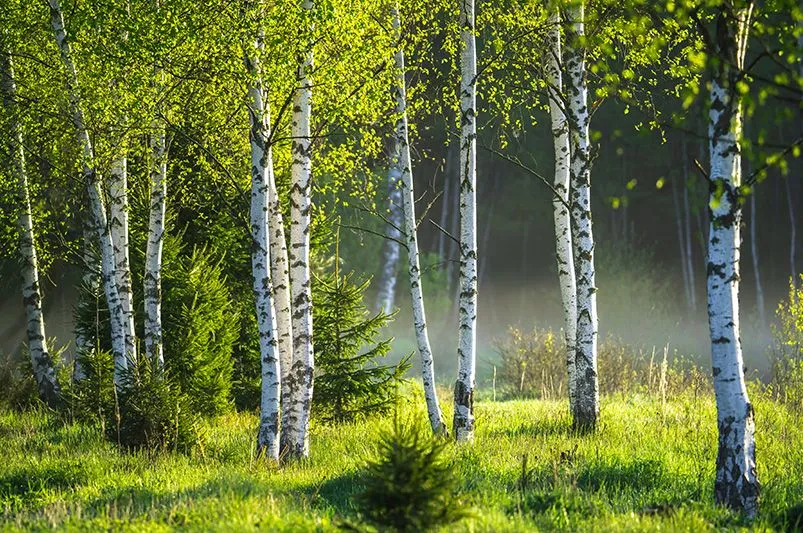
Birch tree is a representation of protection, fertility, and renewal in many cultures. They typically grow to be 40-70 feet tall. You may spot them from their thin, papery bark and small, triangular leaves.
These trees appear in northern forests as they prefer cooler temperatures. However, they won’t thrive until they have well-drained soil types to consume all the minerals.
Birch trees, unfortunately, live a shorter life than most other trees. They can live for only 30-50 years on average.
Beech (Fagus spp.)

Beech is a large deciduous tree that can grow as tall as 50-120 feet tall. It is a beautiful masterpiece with a dense and broad canopy. Beech trees have gray and smooth bark, with oval-shaped green trees that turn golden in autumn.
These trees have a rich history and cultural significance. Many years ago, Beechwood was a major wood type that was used to make writing tablets and books. Similarly, in European folklore, these trees are still the protectors and learning symbols.
Banyan (Ficus benghalensis)
Mostly found in tropical and subtropical regions, Banyan looks like a magical tree. Its hanging roots grow down to the ground, like aerials. What’s more, the massive canopy offers shade to a large space. These trees have glossy and large leaves, helping them catch attention easily.
Banyan trees have a long life and can live for hundreds of years, becoming a symbol of beauty with time.
Their unique characteristics and long life have helped them become a great symbol in many cultures. For instance, in Hinduism and Buddhism, a Banyan tree is considered sacred. Many cultures also associate the tree with meditation and wisdom.
Bottlebrush Tree (Callistemon spp.)
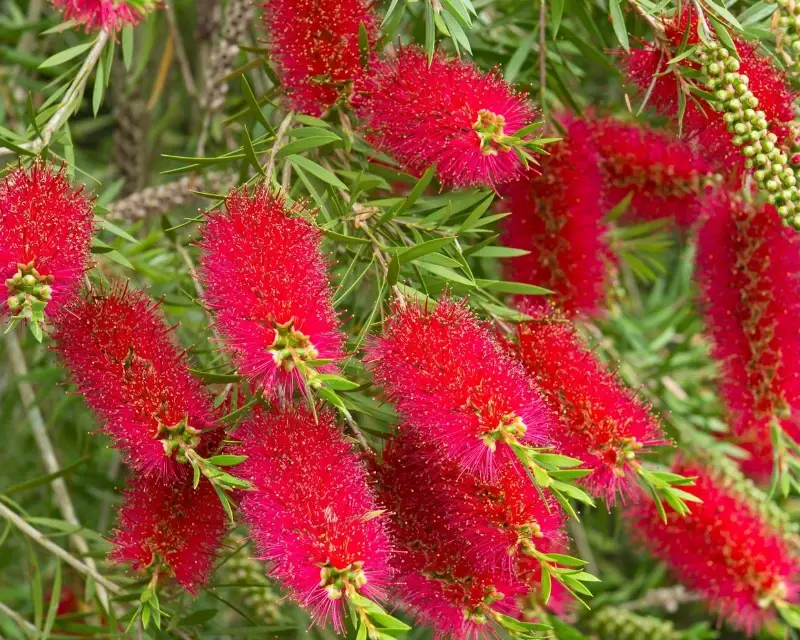
Have you seen a tree with cylindrical flowers in bright colors? Well, that is a Bottlebrush tree for you. It has narrow leaves that, when crushed, give out an amazing fragrance.
These trees can be small to medium-sized and can grow to be 10-20 feet tall. This is why they are usually found in urban landscapes.
This tree is usually found in Australia. In the region, it is a symbol of vitality and adaptability. They can easily make a landscape attractive.
Baobab (Adansonia spp.)
Africans call this tree a symbol of wisdom. In fact, many villagers in the region hold crucial meetings around this tree.
Baobab trees have massive trunks that store water for many days. The leaves resemble a hand and are quite big. The trees also feature small white flowers that bloom at night.
Do you know that this tree also bears fruits? The Baobab fruit is rich in Vitamin C and has plenty of antioxidants. This makes this fruit perfect for food and makeup products.
Additionally, the bark fibers are so solid and flexible that people use them to make rope, baskets, and mats.
Black Walnut (Juglans nigra)
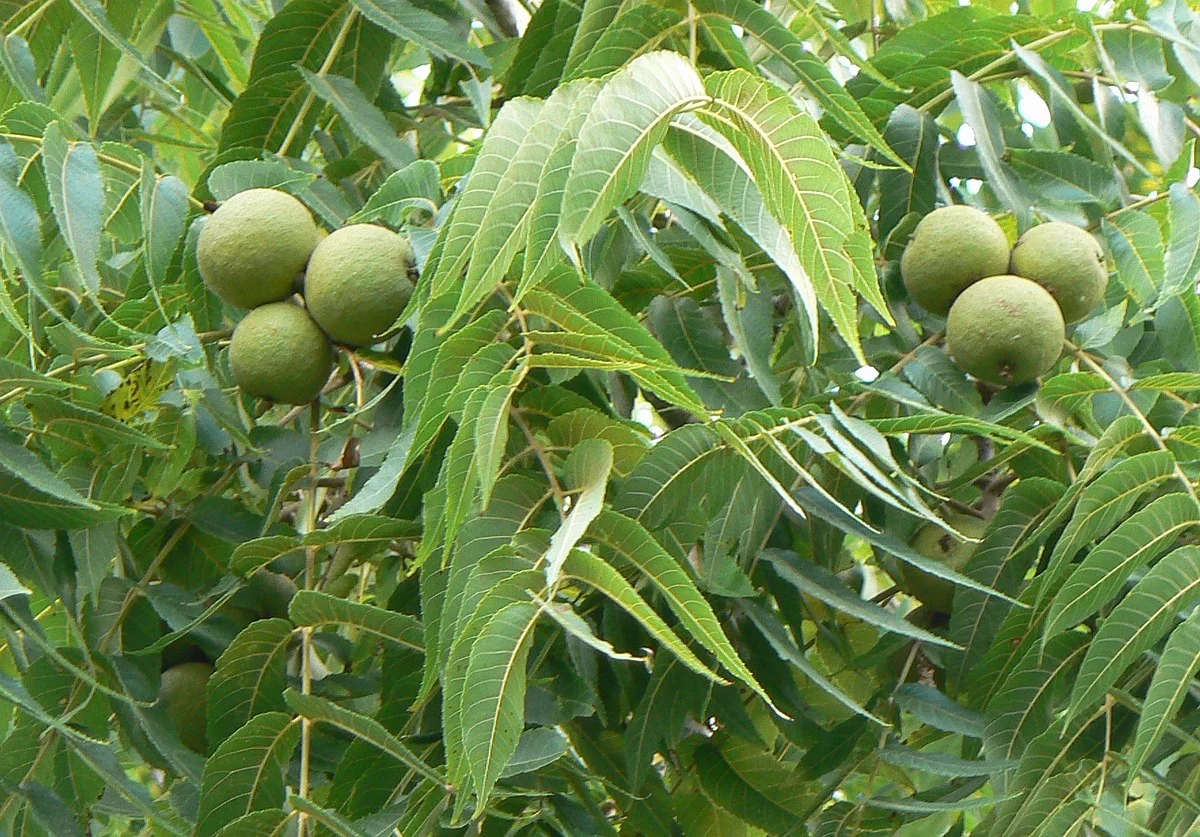
Black Walnut tree is a large deciduous tree with a height of 70 to 100 feet. It features a wide canopy with a dark, rugged bark. The tree bears round and green husks that have brown and hard walnuts.
Found in North America, the Black Walnut tree thrives in well-drained and rich soils and temperate climates. You may find the trees in fields and forests.
Native Americans consider this tree a symbol of wisdom and abundance.
Buckeye (Aesculus spp.)
The Buckeye tree is not only famous for its beauty. It has a strong cultural significance as it is known to bring fortune and protection.
A Buckeye tree can grow to be as tall as 30 to 50 feet. It features showy clusters of small flowers, large leaves, and a smooth, gray bark.
Mostly found in North America, this tree grows with the help of well-drained soils. When grown, it offers food to wildlife, and the tree provides shade to plants.
Here is an interesting fact. Do you know Buckeye seeds are toxic to humans? Yes! However, they are used in creating jewelry and many beautiful decorative items.
Butternut (Juglans cinerea)
Butternut trees are large, with small flowers and long leaves. The bark is dark and gray with a smooth appearance, like most nut trees.
This is also a North American tree with a life of between 30 to 50 years. The nuts grown on the tree provide food for the animals, while its canopy offers shade.
The nuts grown on the tree are usually used in many recipes globally. Plus, the wood has a fine grain, making the tree valuable for processes like furniture making and cabinetry.
Brazilian Rosewood (Dalbergia nigra)
Brazilian Rosewood is another significant tree that starts with the letter B. It is native to Brazil and is usually found in many places in South America. The tree is born for tropical climates as it prefers moist and well-drained soils to grow.
This tree, which has purple flowers and evergreen leaves, is quite popular for its wood quality. Many cultures consider wood for creating high-end furniture and musical instruments.
Bamboo (Various species)
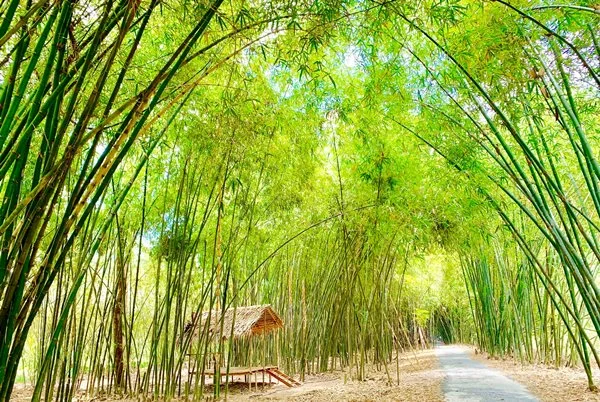
Our last tree, which starts with the letter B, is bamboo. The versatile tree is used in many industries, such as furniture and food. Bamboo trees hold a strong value in Asian cultures. That’s because it has strong resilience, flexibility, and strength.
So, what does it look like? A Bamboo tree has jointed, hollow stems, long leaves, and features dense clumps.
Many Bamboo trees live for five to ten years. But there are some species that can survive for 100 years straight. It’s also not that difficult to plant bamboo.
Fun Facts About ‘B’ Trees
Want to learn some fun facts about the trees for the letter B category? Here are some to make you smile.
- We know Baobabs as the “Tree of Life”. They can easily store thousands of liters of water in their trunks. This technique helps them survive without water for many days.
- Birch trees, also famously called the “Lady of the Woods.” They feature a striking white bark that surprisingly can easily peel like paper.
- Do you know that there is a Great Banyan Tree in India? It conveniently covers more than 3.5 acres of land and appears like a huge forest.
- The Beech tree produces nuts that are also called mast. These nuts were once considered a vital source for both humans and animals.
- A Banyan tree has sprawling aerial roots. These look quite like long legs and help give the tree its nickname, the walking tree.
- A Beech tree produces edible nuts. Plus, it nurtures the soil and wildlife from its shade. All of these characteristics have earned it its infamous nickname, the Mother of the Forest.
Conclusion
Whether you have a presentation to make or generally want to learn about the big or small trees in the letter B category, we hope this article has helped you explore them in detail. Trees are a huge part of our ecosystem, so learning about them is an excellent way to appreciate their significance.


